

It’s 4pm on a Tuesday.
One of your reps has a big meeting Thursday morning with a healthcare prospect, a company that’s been in the pipeline for months. He needs a deck customized to their industry, with their logo on the cover, case studies from similar organizations, and current performance data baked into the slides.
He sends the request to marketing.
Marketing already has six other “urgent” requests in the queue. A flyer for a trade show. An updated one-pager with new pricing. A proposal for another rep’s deal that’s supposedly closing this week.
Now multiply this across a team of 15 reps, all with legitimate needs and real deadlines.
This is the actual personalization problem in B2B sales. Not whether you should personalize your collateral. Everyone agrees on that. The problem is whether your team can produce personalized materials fast enough to keep up with the deals moving through your pipeline.
And for most companies, the honest answer is: not even close.
The personalization gap everyone talks about (but gets wrong)
Most advice on personalized sales collateral treats it as a knowledge problem. Teams just need to understand their buyers better. Build personas. Map the journey. Segment your audience.
That advice isn’t wrong. It’s just incomplete. It skips the part where things actually break down.
The truth is, most marketing teams already know what should be personalized. Industry-specific data. Role-relevant messaging. Case studies from the prospect’s vertical. The buyer’s logo and company details woven throughout. None of this is a mystery.
The breakdown happens in execution. And the stakes are higher than most teams realize. McKinsey research found that 71% of buyers now expect personalized interactions, and 76% get frustrated when companies fail to deliver. That frustration doesn’t just cost engagement. It costs deals.
Meanwhile, Forrester reports that 65% of content created for sales teams goes unused. Not because the content is bad, but because it’s too generic to use in a live deal and there’s no fast way to make it specific. So reps either send generic materials and hope for the best, or they hack together their own versions in PowerPoint at 11 pm. Neither option ends well.
The gap isn’t between “personalized” and “not personalized.” It’s between knowing what good looks like and being able to produce it at the speed deals actually move.
What “personalized” actually means in practice
Part of the problem is that “personalized sales collateral” gets treated as a single thing, when it’s actually a spectrum. Where your team lands on that spectrum determines how much it actually impacts deal outcomes.
Surface-level personalization is the bare minimum: the buyer’s logo on the cover slide, their name in the opening line, maybe their company colors on a few pages. It takes five minutes, and most reps can do it themselves. It also doesn’t move the needle much. Buyers have seen this trick a hundred times. A logo swap doesn’t signal that you understand their business.
Contextual personalization is where collateral starts to actually influence deals. This means the deck a healthcare CFO receives looks materially different from the one a manufacturing VP of Operations gets. Different data points, different case studies, different language about the problems that keep them up at night. This is the tier where buyers start saying things like “it’s clear you understand our space.” It’s also where most teams hit a wall, because producing contextually personalized assets requires real work. Someone has to select the right case studies, adjust the messaging, swap out data sets, and make sure it all still looks polished. For every deal. On a deadline.
Data-driven personalization is the most impactful and the hardest to pull off manually. This is where live numbers get merged into proposals, scorecards, and QBR decks. Current performance metrics, ROI projections built from the prospect’s actual data, and industry benchmarks pulled from real sources. When a rep walks into a meeting with a document that already reflects the prospect’s reality, the conversation starts at a completely different level.
Most teams are stuck at tier one. Not because they don’t understand the value of tier two and three, but because they don’t have a way to produce those materials without burying the marketing team in manual work.
Why the standard advice doesn’t work
The typical solution you’ll find in most sales enablement content goes something like this: build a content library, organize it by stage and persona, and give reps self-serve access. Problem solved.
In theory, that sounds reasonable. In practice, here’s what actually happens.
Marketing builds the library. They organize it carefully, tag everything, and write usage guides. Then a rep needs a deck for a financial services prospect and searches the library for something relevant. They find a case study from 18 months ago, a one-pager with last quarter’s data, and a template that sort of fits but uses messaging from a campaign that ended six months ago.
So the rep does what reps always do: they copy slides from three different decks into a new file, paste in some numbers from a spreadsheet, add the prospect’s logo themselves, and send it off. The fonts don’t match. The data on slide 7 contradicts the data on slide 12. The legal disclaimer is from 2022.
This isn’t a failure of effort or intention. It’s a systems problem. A content library solves the storage challenge, but it doesn’t solve the assembly challenge. Knowing where the ingredients are doesn’t help if you still have to cook every meal from scratch, to order, during a dinner rush.
And every hour a rep spends assembling decks is an hour they’re not selling. Salesforce’s State of Sales report found that reps spend only 30% of their time on actual selling activities. The rest disappears into admin, data entry, and hunting for and customizing content. When your best sellers are spending their evenings in PowerPoint instead of preparing for conversations, the problem isn’t discipline. It’s infrastructure.
The real question isn’t “can reps find content?” It’s “can reps produce finished, on-brand, data-accurate, personalized collateral without creating a bottleneck somewhere in the process?”
For most organizations, the answer requires something beyond a better-organized file system.
The enterprise platform trap
At this point, some teams decide it’s time for a “real” solution. They start evaluating the big enterprise sales enablement platforms, the ones with impressive feature lists and even more impressive price tags.
Implementation takes months. You’re assigned a team of consultants who need to understand your brand guidelines, integrate with your CRM, map your content taxonomy, and build out templates. The project requires dedicated internal resources, too. Someone from marketing, someone from sales ops, someone from IT. Six months and a substantial investment later, maybe you’re up and running.
That’s the first speed problem: time to value. While you’re in implementation limbo, your reps are still Frankensteining decks together, your marketing team is still buried in one-off requests, and your pipeline isn’t waiting around for the platform to go live.
But here’s the part that rarely gets discussed upfront. Even after the platform is live, producing individual assets in many of these systems still requires significant effort. The tools are powerful but complex. Reps need training. Templates need ongoing maintenance by specialists. What was supposed to eliminate the bottleneck just moves it to a different part of the process.
What teams actually need is a solution that solves both speed problems at once: fast to get running, and fast to produce once you’re there.
What a production system for personalized collateral actually looks like
If the bottleneck is production, then the solution has to be operational, not strategic. It’s not about knowing your buyer better (though that always helps). It’s about removing the manual steps between “we know what this prospect needs” and “here’s a polished asset ready to send.”
The components of a system like this aren’t complicated in concept, but they need to work together.
Governed templates lock the elements that should never change: brand fonts, colors, legal language, and approved messaging. They leave defined spaces for the elements that should change per deal. This eliminates the “reps going off-brand” problem without slowing them down.
Data connections pull live numbers from the sources your team already uses. CRM fields, spreadsheets, analytics platforms, APIs. When the data updates, the collateral updates. No one is manually copying numbers from a report into a slide deck.
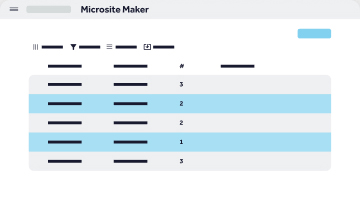
A self-serve interface lets reps select a few inputs: the prospect’s industry, their role, the relevant use case, the stage of the deal. The system assembles a finished asset. Not a rough draft that needs design review. A finished, branded, accurate document that can go out the door.
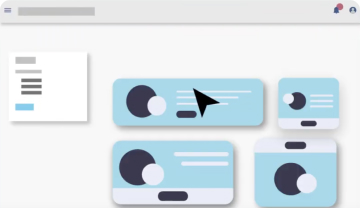
Here’s what this looks like in practice: a rep has a meeting with a healthcare prospect on Thursday. Instead of submitting a request to marketing, they open the portal, select the healthcare template, choose the relevant case studies, and the system generates a branded deck with the prospect’s logo, industry-specific data points, and performance benchmarks already formatted. Total time: a few minutes. No design queue. No version control chaos. No late-night PowerPoint surgery.
The marketing team’s role shifts from producing individual assets on demand to building and maintaining the templates and data feeds that power the system. They go from being a short-order kitchen to being the architects of the menu. It’s a fundamentally different operating model, and it’s the only way personalization scales without scaling headcount.
Measuring whether your personalization efforts are actually working
Most personalization advice completely drops off here. Everyone tells you to personalize. Almost no one tells you how to know if it’s making a difference.
Three metrics worth tracking:
Time-to-asset is the most immediate indicator. How long does it take from the moment a rep identifies what they need to the moment they have a finished, personalized asset in hand? If the answer is “days,” you have a production problem, no matter how good your content strategy is. If the answer is “minutes,” you’ve solved the bottleneck that keeps most teams stuck at surface-level personalization.
Content utilization rate tells you whether the materials you’re producing are actually getting used in deals. If your team is creating hundreds of assets but reps are still defaulting to their own cobbled-together decks, the system isn’t working. Either the content doesn’t match what reps need, or it’s too hard to find and use in the moment. High utilization signals that your collateral is both relevant and accessible.
Downstream engagement connects your collateral to business outcomes. Are personalized assets getting opened by prospects? Are they being shared internally within the buying committee? Are deals that include personalized collateral closing at higher rates or moving faster through the pipeline? This is the data that turns “personalization is important” from a belief into a business case.
Most teams track none of these. They produce content, distribute it, and hope it’s working. The organizations that win at personalized sales collateral are the ones that treat it as a measurable operation, not a vague aspiration.
The bottom line
The conversation about personalized sales collateral has been stuck in the same loop for years: know your buyer, tailor your messaging, curate your content library. That advice was fine when it was new. But the companies that are actually winning with personalization have moved past strategy and into execution.
They’ve stopped asking “should we personalize?” and started solving the harder question: how do we produce personalized collateral at the speed our pipeline demands, without burning out the marketing team or spending six months implementing a platform?
The answer isn’t more personas or better buyer journey maps. And it isn’t a massive enterprise platform that takes half a year to deploy. It’s a production system that makes personalization the default: fast to implement, fast to produce, and consistently on-brand.
The teams that figure this out don’t just personalize better. They sell faster.
Ready to see what a personalization system looks like in practice? Clatter helps marketing and sales teams generate branded, data-driven collateral in minutes, not days. Book a demo and see how it works with your content and data.