

You’ve automated your email nurtures. Your appointment reminders go out on schedule. Your member journey workflows are humming along. So why does your marketing team still feel buried?
This usually comes down to the fact that most healthcare organizations invest in tools that solve the distribution problem. It doesn’t touch what actually eats your hours: the endless cycle of creating, customizing, and maintaining the content that feeds the machine.
Here are seven tasks that should become healthcare marketing automations but almost never are – and what changes when you finally fix them.
Healthcare Marketing Automation #1: Building custom decks for product and sales teams
The regional sales director needs a presentation for a new employer group. Product marketing wants an updated deck for broker training. The account team is pitching a renewal and needs plan-specific slides by Friday.
Each request seems reasonable. But when you’re fielding three to five of these per week – each requiring custom plan details, regional data, and market-specific messaging – your team becomes a production shop instead of a marketing department.
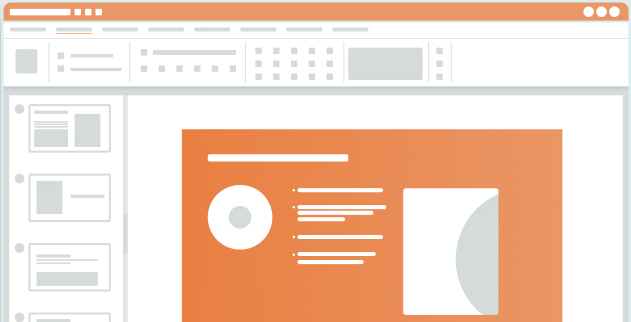
What automation looks like: A library of pre-approved slide modules that sales and product teams can assemble themselves. They pick the slides they need, swap in the relevant plan data, and export a polished deck – all within brand guardrails, no design skills required.
Healthcare Marketing Automation #2: Creating region-specific versions of the same collateral
You designed a great flyer. But now you need twelve versions – one for each market, each with the correct plan names, contact numbers, premium rates, and state-specific disclosures. Multiply that by every open enrollment campaign, every product launch, every quarter.
This is where marketing hours go to die. Not on strategy. Not on creative. On find-and-replace at scale.
What automation looks like: Templates with dynamic fields that pull region-specific information automatically. One base design, infinite variations, zero manual editing.
Healthcare Marketing Automation #3: Chasing compliance approvals
In healthcare, nothing goes out the door without legal and compliance sign-off. Which means email threads. Redlines. Version confusion. “Wait, which PDF has the final approved language?”
The approval process itself isn’t optional – but the chaos around it absolutely is.
What automation looks like: Content that’s built from pre-approved messaging blocks. If the language has already been vetted, and the template locks down what can and can’t be changed, the compliance review becomes a formality rather than a bottleneck.
Healthcare Marketing Automation #4: Reformatting content across channels
The blog post becomes a one-pager. The one-pager becomes a social graphic. The social graphic becomes a slide. The slide goes into a broker presentation. Each transformation is done by hand.
This isn’t creative work – it’s format conversion. And it’s one of the sneakiest time drains in enterprise marketing because each individual task feels small.
What automation looks like: Modular content that lives once and deploys everywhere. Write the core message, and the system outputs it in every format you need – same words, different wrappers.
Healthcare Marketing Automation #5: Updating evergreen materials when details change
Your premium rates just changed. Your network directory is out of date. The phone number on half your PDFs routes to a line that was disconnected six months ago.
Evergreen content is only evergreen if you can actually keep it current. But when those updates require manually hunting down every file where the old information lives? Things slip through.
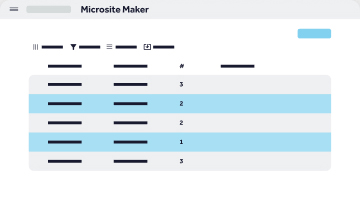
What automation looks like: Centralized data fields that update across all materials at once. Change a rate or a phone number in one place, and every flier, brochure, and microsite reflects it immediately.
Healthcare Marketing Automation #6: Launching new products or plans with branded materials
A new plan launches. Marketing gets a week to stand up the entire collateral library – sell sheets, broker guides, member materials, digital assets. Same scramble, different product, every single time.
For growing healthcare organizations, this isn’t a one-time fire drill – it’s a recurring operational challenge that only gets harder as you scale.
What automation looks like: A product launch workflow where you input the new plan’s details and the system generates a complete set of branded materials – ready for review, not ready to be built from scratch.
Healthcare Marketing Automation #7: Maintaining brand consistency across a distributed organization
Somewhere in your organization, right now, someone is using a PowerPoint template from 2019. Someone else is “just tweaking” the logo colors to match their regional preferences. A sales rep is creating their own leave-behinds in Canva.
In a distributed healthcare organization, brand entropy isn’t a risk – it’s a certainty. The question is whether you have systems to contain it.
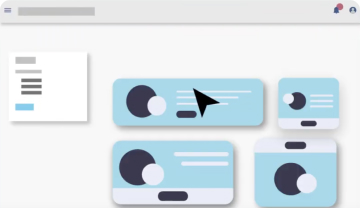
What automation looks like: A single source of truth where all approved assets live, with controls that allow customization only within defined boundaries. People can self-serve without going rogue because the guardrails are built in.
The real unlock
None of these tasks are glamorous. None of them show up in case studies about breakthrough healthcare marketing campaigns. But collectively, they’re where the hours go.
One large healthcare enterprise found that automating just their presentation workflows saved more than 600 marketing hours per year – on a single initiative.
The goal isn’t automation for its own sake. It’s finally having capacity for the work that actually moves the needle: the campaigns, the positioning, the strategy that got you into marketing in the first place.
That’s what healthcare marketing automation should really be about.
If you’d like to see how Clatter can help, talk to our team here.